The term “sober curious” was barely in the cultural vocabulary eight years ago. Ruby Warrington put it on the map in 2018 with her book of the same name, which encouraged people to examine their relationship with alcohol without the framework of addiction or recovery. The question wasn’t “do you have a problem?” but something quieter and harder to answer: “Why are you drinking in the first place?”
That question has since traveled far beyond the book’s readership. In 2026, it’s showing up in purchase data, bar menus, restaurant programs, and the social media feeds of an entire generation that is fundamentally rethinking what a night out looks like. The numbers have followed.
The Numbers Behind the Shift
The data on this has been building consistently for several years, and the trajectory is clear.
Nearly one in two Americans (49%) say they plan to drink less alcohol in 2025, a 44% increase since 2023. That figure has grown from 34% in 2023 to 41% in 2024, indicating sustained rather than temporary interest in cutting back. Dry January, once a fringe New Year’s resolution, has become something approaching a mainstream behavioral reset: 30% of Americans took part in 2025, a 36% increase from 2024. And the effects reach well beyond January itself, with NCSolutions purchase data showing a 22% increase in nonalcoholic beer purchases year over year.
The purchasing behavior shift shows up in hard numbers. In January 2024, spirits purchases dropped 39%, wine fell 36%, and beer, cider, and hard seltzer decreased 21% compared to the prior month. That’s a population actively changing its habits, and the data suggests the change is sticking.
Meanwhile, awareness of non-alcoholic-only bars, tasting rooms, and distilleries grew from 31% to 34% between 2024 and 2025, while interest in visiting them jumped from 31% to 41% in the same period. Interest is outpacing awareness, which is the more telling number.
Gen Z Is Leading, But It’s Not Just Gen Z
When people talk about the sober curious movement, the conversation usually pivots to Gen Z almost immediately, and for good reason.
Nearly two in three Gen Zers plan to drink less, and 39% plan to adopt a dry lifestyle not just during January but throughout the entire year. Gen Zers drink, on average, 20% less than millennials, who also drink less than older generations. The decline is generational and compounding. Each cohort coming of age is starting from a lower baseline than the one before.
The reasons aren’t mysterious. Almost 86% of Gen Z believe their mental health is as significant as their physical health when considering drinking alcohol. This generation grew up watching mental health conversations happen openly on social media, which normalized the idea that alcohol’s effects on mood, sleep, and anxiety are worth paying attention to. Among Gen Z specifically, 58% say they plan to drink less to improve their mental health, a 45% increase from the year prior. That particular driver matters because it isn’t about addiction or abstinence politics. It’s about wanting to feel better, and being willing to trace the cause back to what’s in the glass.
But the movement is not only a Gen Z story. After learning about the sober curious movement, 52% of Gen Z and millennials say they are likely to participate in it. Millennials now in their 30s and early 40s are dealing with different pressures: parenting, career demands, health concerns that compound with age. The calculus for drinking changes when a glass of wine no longer means a pleasant buzz and instead means disrupted sleep and a foggy morning. Among Sober October participants surveyed in 2025, participation was highest for those aged 21 to 29 (36%) and 30 to 44 (37%), which means the core sober curious audience spans roughly two full decades of adults.
What’s Driving It Beyond Health
Health is the most visible driver, but it’s not the only one.
Mental health awareness. The normalization of therapy and honest conversations about alcohol’s effect on mental states has given people permission to connect cause and effect in their own lives. If you know that alcohol is a depressant and you also struggle with anxiety or depression, the decision to skip the drink becomes less about willpower and more about straightforward self-care.
Social media and identity. Being sober or drinking less has become aspirational among younger generations in a way it simply wasn’t before. The sober curious lifestyle has its own aesthetic, community, and content. Choosing not to drink is no longer socially costly in the way it might have been for someone who came of age in the 1990s.
The quality of alternatives has improved dramatically. This is genuinely underrated as a driver. Five years ago, ordering a non-alcoholic drink at a bar meant a Shirley Temple or a soda water with lime. Today it might mean a zero-proof cocktail built with Seedlip, Lyre’s, or Abstinence spirits, served in a coupe glass with the same care as anything else on the menu. Over half of Gen Z drinkers report that they often or sometimes choose non-alcoholic beers, mocktails, or low-ABV cocktails when socializing. That choice is easier to make when the alternatives are actually good.
Finances. A round of drinks at a bar in a major city can easily run $60 to $80. Financial stability is one of the key factors identified in driving younger adults toward reduced alcohol consumption. When you’re managing rent, student loans, and a cost of living that has increased significantly over the past several years, cutting alcohol is one of the more painless line items to reduce.
Changing social contexts. Socializing for Gen Z has shifted meaningfully toward online environments, and alcohol consumption is not a central activity in digital social gatherings the way it is at in-person bar happy hours. A generation that developed social comfort through Discord, gaming sessions, and group chats carries those habits into physical social spaces. Alcohol isn’t required for belonging in the way it may have felt to older generations.
What Sober Curious Is Not
It’s worth being precise about what this movement actually is, because it gets conflated with things it isn’t.
Sober curious is not the same as sobriety in the recovery sense. The framework is explicitly not about addiction, though it welcomes people in recovery. It’s about examining your relationship with alcohol from a place of choice rather than crisis. Many young adults are making a conscious decision to step away from alcohol without external pressure, reflecting a growing awareness of its impact rather than a response to a problem.
It’s also not necessarily permanent or total. Plenty of sober curious people drink occasionally at weddings or on vacation, and spend most of their time not drinking. The movement accommodates a spectrum from “drinking less” to “not drinking at all,” and the lack of a rigid definition is part of why it has spread so broadly.
And it’s not a rejection of nightlife or social connection. This is the piece that matters most. The sober curious movement is fundamentally about wanting to participate in social life on different terms, not withdraw from it. The demand is for venues and spaces that make that participation easy and enjoyable, which is exactly what a growing ecosystem of alcohol-free and sober-friendly venues across the country is being built to provide.
What It Looks Like in Practice
The most visible sign of the sober curious movement in American cities is the bar and venue landscape itself. There has been a wave of sober bars opening across the country, including Hekate in New York City, Sans Bar in Austin, and The Sober Social in Atlanta. These are not novelty concepts. They are businesses that have found sustainable audiences.
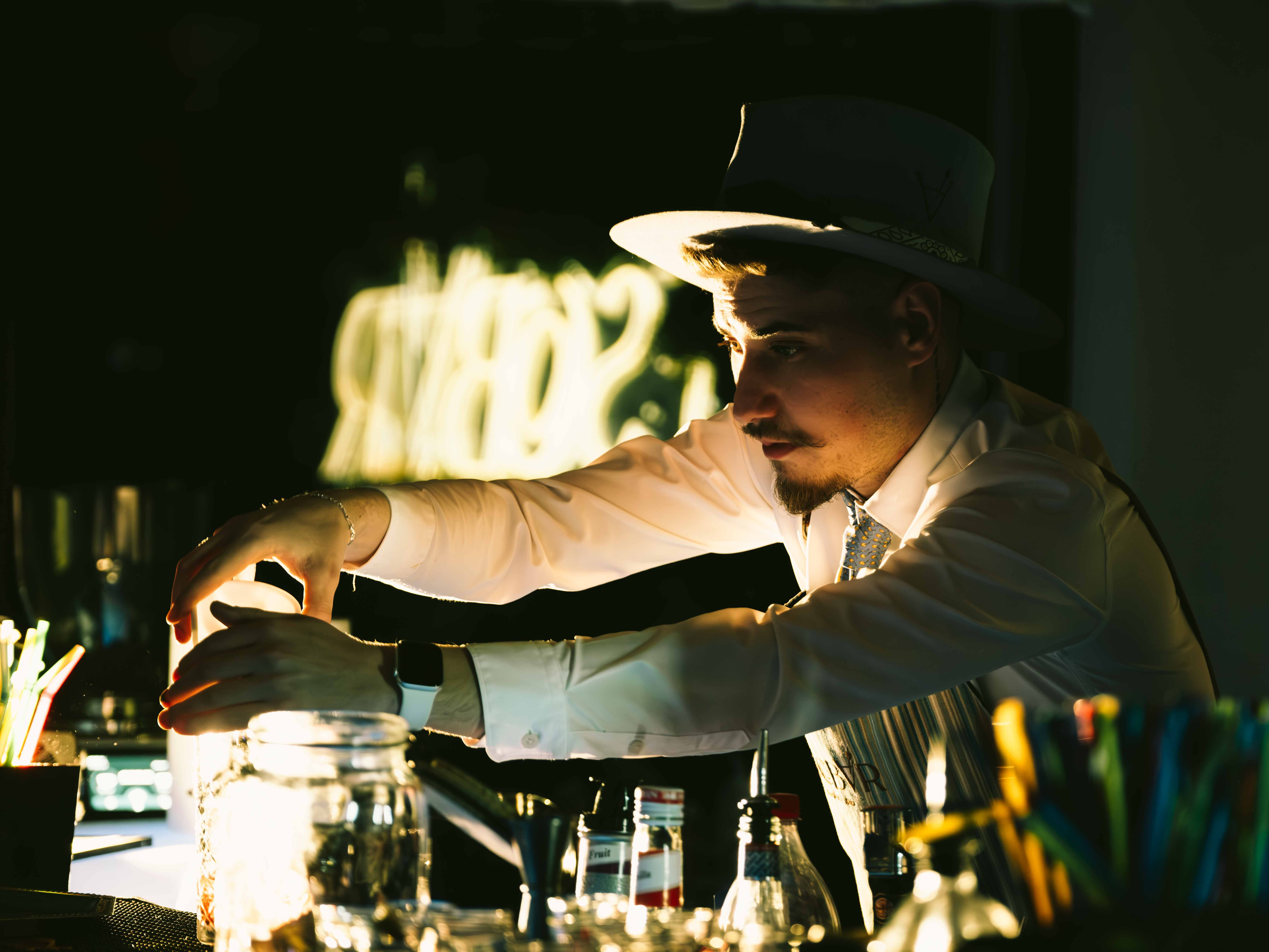
The fully alcohol-free venue category is growing, but it’s only one piece of the picture. The more significant shift may be happening at conventional bars and restaurants that have invested in serious zero-proof programs. A tiki bar crafting its own in-house non-alcoholic spirits. A fine dining restaurant offering spirit-free pairing menus alongside tasting menus. A neighborhood cocktail bar with a dedicated mocktail section that gets updated seasonally. These are the signs of a shift happening at scale.
Cities like Chicago and New York now have dozens of venues where a sober curious person can have a genuinely good night without encountering a single moment of awkwardness about what they’re drinking. That wasn’t true five years ago.
Where It’s Headed
The cohorts drinking less are growing as a share of the adult population, and their habits are reshaping what bars, restaurants, and beverage brands have to offer to stay relevant. Interest in low-ABV cocktails under 3% ABV grew from 46% to 51% between 2024 and 2025 among adults who drink at all. The demand isn’t only coming from non-drinkers. It’s coming from people who drink but want options that fit different moments, different moods, and a more considered relationship with how they feel the next morning.
The sober curious movement is no longer a cultural moment to be tracked. It’s a durable shift in behavior, showing up in purchase data, venue investment, menu design, and the social identities of a growing share of the adult population. The question Ruby Warrington posed in 2018, why are you drinking in the first place, has turned out to be one of the more consequential questions of the decade.
If you’re looking for spaces that take that question seriously, the Downtown Dry directory covers alcohol-free and sober-friendly venues across more than 430 cities. You can also jump straight to the national hubs for sober bars, mocktail bars, and non-alcoholic bars, or read our city guides for New York, Chicago, and Los Angeles.