Kava is not physically addictive for most people who drink it the way it has been drunk for centuries, in a water preparation at a bar or a ceremony. It does not act on opioid receptors, it is not strongly euphoric, and controlled studies that stopped low doses of kava extract found no withdrawal symptoms. That is the short answer.
The longer answer is more useful. Kava can become a habit for heavy daily users, there are now published case reports of withdrawal in people using large amounts, and much of what looks like kava dependence in the United States is actually kratom. If you are worried about your own use, those distinctions matter.
We cover the pharmacology in the science behind kava, the difference between the two plants in kava vs kratom, and the basics of the bar scene in what a kava bar is. This piece is about dependence and risk.
What “addictive” actually means
The word gets used for three different things.
- Physical dependence means your body has adapted to a substance, so stopping causes withdrawal. This is what people usually mean by addictive.
- Tolerance means you need more to get the same effect.
- A habit means you reach for something regularly because it helps you sleep, relax or socialize. A habit is not dependence, but it is the thing that can slide into one.
Kava is unusual on the first two. It is known for a reverse tolerance, where regular drinkers often feel more from the same amount over the first several sessions rather than less. That is widely reported by kava drinkers but not well studied. The dependence profile is low in most of the literature, though not zero.
What kava does in the body
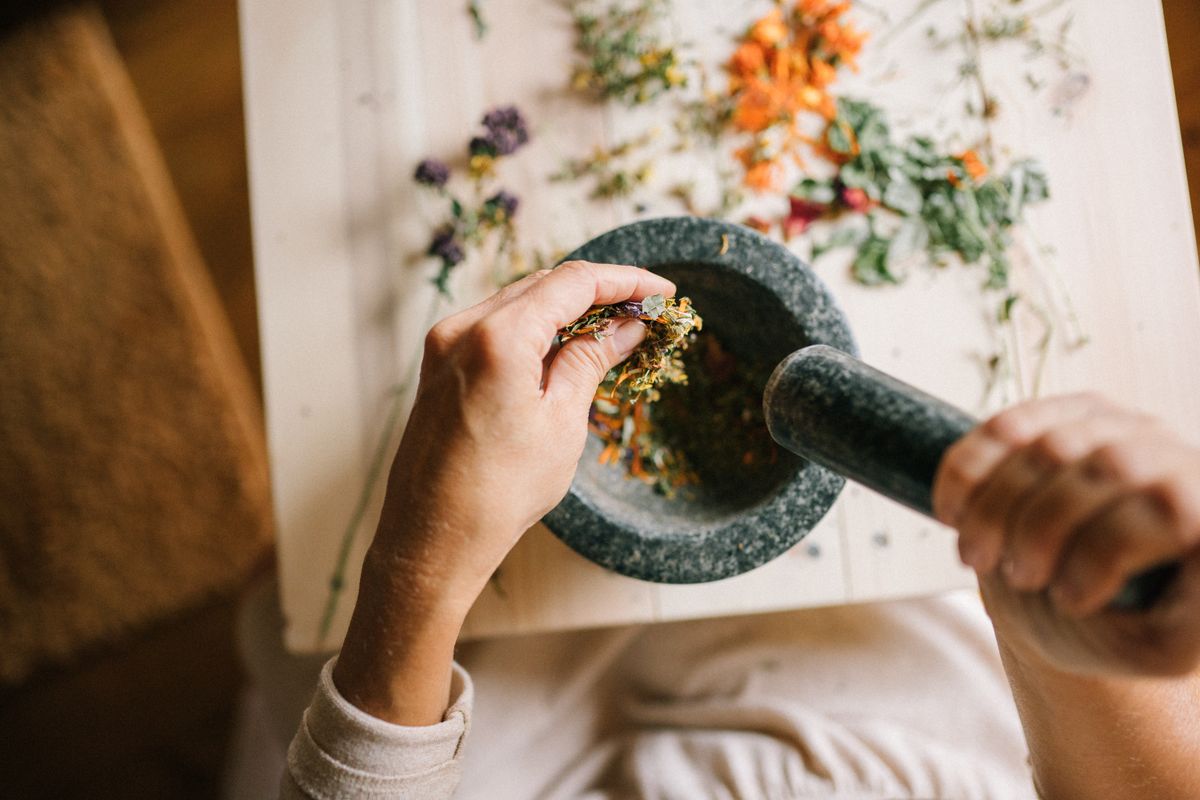
Kava comes from the root of Piper methysticum, a pepper-family plant native to the Pacific Islands. Its active compounds, kavalactones, act mainly on GABA-A receptors, the same broad system that alcohol and benzodiazepines affect, though through different binding sites. Kava does not act on opioid receptors and does not produce an opioid high.
The effect people describe is muscle relaxation, a quieter head and less social anxiety, with thinking largely intact. That is why it fits a kava bar and not a nightclub. The GABA connection is also why heavy use can produce a sedative-type withdrawal picture, which is the part that matters here.
What the research says about dependence
The best summary of the controlled evidence comes from a 2024 case report and literature review in the Journal of Addiction Medicine. The authors searched for reports of kava withdrawal and found nine studies. Eight assessed withdrawal symptoms after people stopped a low, controlled dose of kava extract, and none found symptoms. The ninth described a case series of heavy kava users with seizure-like events.
That is the shape of the evidence. At clinical trial doses, stopping kava did not produce withdrawal. In heavy, uncontrolled use, it occasionally has.
The case reports are worth knowing about:
- 2024, Journal of Addiction Medicine. A man arrived at an emergency department after a fall while intoxicated on kava. He reported escalating amounts for weeks despite trying to stop, and developed hyperactive delirium consistent with acute kava withdrawal. He was treated with phenobarbital and improved over four days.
- 2025, American Journal of Emergency Medicine. A 45-year-old man had hallucinations, anxiety, insomnia and muscle jerking after stopping a heavily used beverage containing both kava and kratom. He improved with phenobarbital.
- 2026, Journal of Addiction Medicine case series. Four men, all with psychiatric illness and alcohol use disorder, all consuming more than the recommended amounts of a kava and kratom blend. Their withdrawal looked like sedative withdrawal and improved with phenobarbital or benzodiazepines.
Notice what those cases have in common: very heavy use, concentrated or blended products, and often another substance. None describe someone drinking a shell or two at a kava bar on a Friday.
The kratom problem, which is most of the story
If you have heard that kava is addictive, there is a decent chance the story involved kratom.
Kratom comes from Mitragyna speciosa, a coffee-family tree from Southeast Asia. Its active compounds act on opioid receptors. Kratom dependence and withdrawal are well documented and look like opioid withdrawal: anxiety, insomnia, sweating, gastrointestinal upset, muscle aches and cravings. That is a real, separate risk, and it is the subject of our full kava vs kratom comparison.
The two plants are sold at the same counters and often mixed in the same bottle. In 2026, researchers at the University of Alabama at Birmingham published an analysis in Clinical Toxicology of five retail products marketed as kava, submitted after a cluster of opioid-like withdrawal cases. Three contained both kavalactones and kratom alkaloids, including mitragynine pseudoindoxyl, which has greater opioid activity than mitragynine. One contained kratom with no detectable kavalactones at all.
A second 2026 case report in the Journal of Addiction Medicine described a 36-year-old man who developed rapid tolerance, frequent redosing, nighttime withdrawal and severe gastrointestinal symptoms after heavy use of a gas-station “kava” shot. His symptoms did not respond to benzodiazepines but improved rapidly with buprenorphine, which points to opioid receptor dependence. Testing found kratom derivatives in the product.
The practical takeaway: if a product labeled kava produces opioid-like effects or opioid-like withdrawal, it probably is not just kava. That does not mean every kava product is adulterated. It means the cheap ready-to-drink shots, especially the ones sold at gas stations and vape shops, are not a reliable way to know what you are drinking.
What the CDC data shows
The CDC published an analysis of kava-related poison center reports in April 2026, covering 2000 through 2025. The numbers measure harm, not addiction.
- Kava-related exposure reports fell after the FDA’s 2002 advisory on liver injury, then rose 383% between 2011 and 2025, from 57 reports to 203.
- In 2025, 30% of kava-related reports also involved kratom. Before 2017, that number was effectively zero.
- Serious medical outcomes rose from 12% of reports in 2000 to 32% in 2025, and 43% of reports involved more than one substance.
The CDC’s conclusion is not that kava is addictive. It is that the commercial kava market has grown faster than the evidence and regulation around it, and that the rise in kava and kratom co-use has coincided with more serious outcomes. The FDA reached a related conclusion in 2020, when it said kava is not safe for use as a recreational or relaxation beverage, citing the unregulated, high-kavalactone products sold in the U.S.
Traditional kava and a 30 ml concentrated shot are not the same product.
The liver and skin questions
Two other risks come up with heavy use, and both are signals that someone is using a lot.
Liver injury. The NIH’s National Center for Complementary and Integrative Health says various kava products have been linked to rare cases of liver injury, some serious or fatal. Cases have involved both supplements and water-prepared beverages. Suggested causes include the wrong plant cultivars, contamination, combining kava with alcohol, and long-term high-dose use.
Kava dermopathy. Long-term use of high doses can cause dry, scaly, flaky skin, sometimes with reddened eyes and a temporary yellow tint to the skin, hair and nails. A 2026 case report in the Medical Journal of Australia described a 41-year-old woman who developed a widespread itchy rash after six weeks of kava for anxiety and insomnia. A biopsy was consistent with acute kava dermopathy, and she had mild liver test changes. It is generally temporary and improves when use drops, but it is a visible sign that the amount is too high.
Is kava a safer substitute for alcohol?
For some people, yes. Kava gives a social, relaxing effect without the intoxication or the hangover, and a kava bar is a genuinely different kind of night out. That is why we track kava bars across the country.
But “safer than alcohol” is not the same as “safe for someone in recovery.” Kava works on GABA, some of the case reports above involve people with alcohol use disorder, and swapping one nightly wind-down for another deserves a conversation with a doctor or a recovery support person rather than a blog post.
How to keep the risk low
None of this means kava is dangerous for the occasional drinker. It means the dose and the product matter.
- Stick to traditional water preparation when you can. Ground root, water, kneading and straining. Avoid concentrated extracts and mystery shots.
- Keep it occasional. A few shells at a bar is a different thing from daily use for weeks.
- Do not mix it with alcohol, benzodiazepines or other sedatives. The CDC data and the NCCIH both flag this.
- Do not drive after drinking it. Plan a ride the same way you would for alcohol.
- Skip it if you are pregnant or nursing, have a liver condition, or take prescription medication. Ask your doctor or pharmacist about interactions.
- If you stop after heavy use and feel anxious, shaky, sleepless or worse, get medical help. Sedative withdrawal can be dangerous.
The bottom line
Kava has a low potential for physical dependence at normal doses, and most people who drink it socially will never experience withdrawal. It is not in the same category as opioids, nicotine or alcohol. But it is not inert, heavy daily use can become a habit, and there are now real case reports of withdrawal in people using large amounts, usually alongside kratom or other substances.
The most important thing to understand is the product. Traditional kava from a bar you trust, drunk occasionally, is a very different risk from a concentrated gas-station shot that may contain kratom.
Sources
- NCCIH, Kava, updated April 2025.
- CDC, Poison center reports linked to kratom-containing kava, 2000-2025, MMWR 2026.
- Cassidy et al., Kava withdrawal treated with phenobarbital, J Addict Med 2024.
- Bleifuss et al., Severe kava withdrawal, Am J Emerg Med 2025.
- Kiyokawa et al., Kava-potentiated withdrawal, J Addict Med 2026.
- Marshall et al., Kratom alkaloids in products marketed as kava, Clin Toxicol 2026.
- Malhotra et al., When “Kava” isn’t kava, J Addict Med 2026.
- Abid et al., Acute kava dermopathy, Med J Aust 2026.
- FDA, Review of the literature on the safety of kava, 2020.
This article is general information, not medical advice. Kava interacts with medications and is not appropriate for everyone. Talk to a healthcare provider about your own situation, particularly if you take prescription medication, have any liver concerns, or are trying to stop heavy use.
Photo: Sheminghui.WU on Wikimedia Commons, CC BY-SA 4.0.